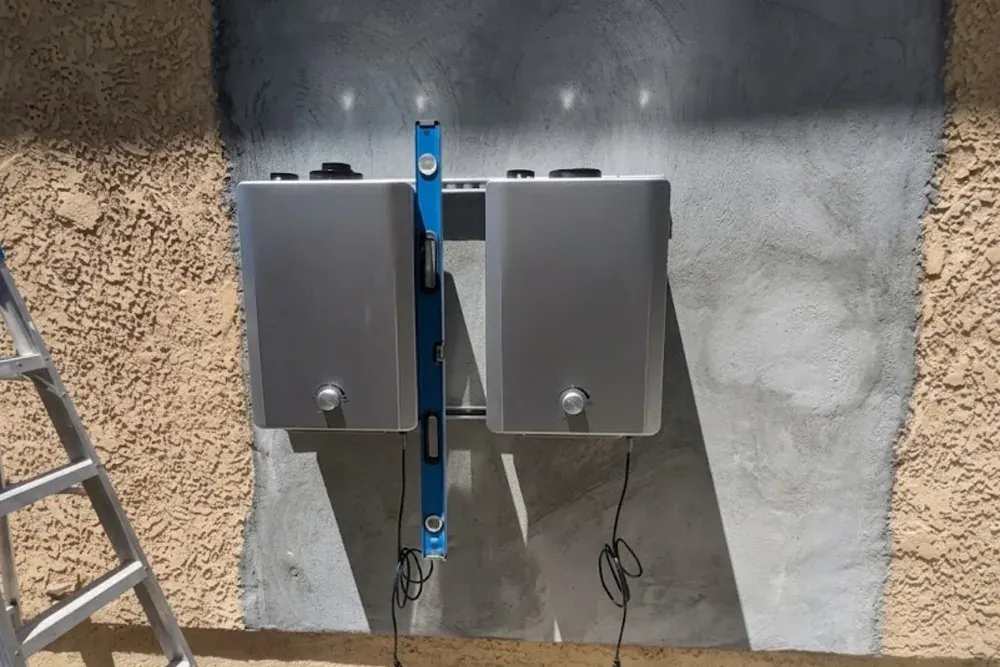
The short answer
A tankless heater is sized by two numbers: how many gallons per minute you need at once, and how many degrees the unit must raise the incoming water. Add up the fixtures you use at the same time, then compare that flow to what the heater can deliver at your temperature rise.
For a family home, that usually means choosing a unit that covers two showers at once plus a small kitchen draw. For a one-bath home, a smaller unit may do. A plumber measures your incoming water temperature and your gas line so the numbers are real, not guessed.
Typical fixture flow rates
These are common ranges. Your fixtures may differ, so check labels or time a bucket fill.
| Fixture | Typical flow (gallons per minute) | Notes |
|---|---|---|
| Shower | About 2 to 2.5 | Low-flow heads use less |
| Bathroom sink | About 1 | Often mixed with cold |
| Kitchen sink | About 1.5 to 2 | Hot only when needed |
| Dishwasher | About 1.5 | Brief cycles |
| Clothes washer | About 2 to 3 | Hot cycles only |
Peak demand is the sum of what runs together, not everything in the house.
How to size a tankless unit
The method is simple arithmetic.
- 1
List your simultaneous uses
Think of your busiest morning. Two showers, a dishwasher and a sink might all run together.
- 2
Add the flows
Use the table above to total gallons per minute.
- 3
Find the temperature rise
Subtract your incoming water temperature from your target, often about 120 degrees. A plumber measures the incoming temperature.
- 4
Check the heater curve
Every model lists the flow it can deliver at each temperature rise. Pick one that meets your total.
- 5
Check fuel and venting
A gas unit needs the right gas line size and a proper vent. An electric unit needs heavy circuits.
Gas supply and venting
Gas tankless units draw a lot of fuel when they fire, much more than a tank heater. If the gas line is too small, the unit starves and throws error codes even if the heater itself is sized correctly. The plumber checks line size and meter capacity as part of sizing.
Venting also matters. Gas units often use special vent pipe, and the route to outdoors affects the layout. A planned install avoids surprises. See tankless water heater service for what the visit includes.
Common sizing mistakes
Four errors cause most complaints.
Sizing for the average day
The unit fails on the busiest morning. Size for peak.
Ignoring incoming temperature
Colder water needs more heat. Measure it.
Forgetting the gas line
A big unit on a small line underperforms.
Skipping hard water
Scale shortens life and lowers flow over time.
What a sizing visit measures
A good sizing visit replaces guesses with measurements. The plumber measures the incoming water temperature with a thermometer, times the flow at your busiest fixtures and checks how long and how wide your gas line is between the meter and the heater. Those three readings decide whether a unit will perform on your busiest morning.
The visit also covers the vent route, the clearances around the wall space, the condensate drain on high-efficiency models and the electrical supply for controls. A heater that is sized perfectly but cannot vent where you want it needs a different location, and that is far easier to learn before the unit is bought.
Reading a specification sheet
Every tankless model publishes a performance chart. It shows the flow the unit can deliver at each temperature rise, and the flow falls as the rise grows. Pick the figure that matches your coldest incoming water, not an average, and compare it to your peak total.
The sheet also lists a minimum activation flow, the lowest flow at which the burner or element will fire. If a fixture runs below that level, the unit may not start and the water stays cold. A low-flow faucet on a large unit is a common source of cold bursts.
Tankless or tank in a Santee household
A tankless unit has no standby loss, a smaller footprint and no tank to fail. It also costs more up front, needs a flush plan in hard water and still has the wait time for hot water to reach a far fixture. A recirculation line can shorten that wait, at the cost of more equipment and energy.
A tank heater suits a household with simple demand and a budget focus. A tankless unit suits a household that has run out of hot water on busy mornings, or that wants the garage wall back. Neither choice is wrong, and a plumber can lay out both on the same visit.
Where sizing numbers come from
Flow ratings come from fixture labels, and temperature rise comes from the difference between incoming water and your target. The California Plumbing Code, based on the Uniform Plumbing Code (UPC), and the maker's guidelines set the gas and venting limits for each model.
A plumber can measure your incoming temperature and gas line before recommending a size, which beats guessing from a chart.
Santee note: hard water and permits
Padre Dam Municipal Water District's 2023 report puts hardness at about 9 to 18 grains per gallon, depending on the plant. Scale narrows the heat exchanger, so a flush plan and sometimes a softener belong in the budget. See water softener and filtration.
The City of Santee has a page on solar water heating permits but does not list conventional water heaters on its page about work not requiring a permit. Ask Planning and Building what your tankless project needs.
Sources: Padre Dam Municipal Water District, 2023 Water Quality Report. City of Santee Planning and Building pages.
Want a tankless unit sized for your house?
Call the 24/7 line to book a sizing visit.
Tankless sizing questions
A plumber measures it with a thermometer at the tap. It changes with season, so use the coldest reading for sizing.
If the unit's flow at your temperature rise covers the total, yes. Otherwise you can feel the drop.
No. A larger unit costs more, needs a bigger gas line and can short-cycle at low flow.
Not the rating, but scale reduces flow over time. Budget for flushing.
Yes. See our El Cajon page for coverage, and water heater installation for planned installs.