Planning a water heater installation
A new installation starts with the household: how many people, how many bathrooms and when they use hot water. A heater too small leaves someone cold, and one too large wastes fuel. The plumber also checks fuel supply, venting, space and the condition of the water lines before ordering anything.
If your current heater has failed already, water heater replacement covers the fast swap, and this page covers planned work.
Choosing a type
Each type suits a different home.
| Type | Good for | Trade-offs |
|---|---|---|
| Gas tank | Homes with a gas line, fast recovery | Needs venting, uses fuel |
| Electric tank | Homes without gas | Higher running cost in most cases |
| Hybrid heat pump | Lower running cost, efficient | Needs space and air flow, more complex |
| Tankless | Endless hot water, small footprint | Higher upfront cost, see tankless water heater |
The plumber helps match the type to your meter, venting and budget.
What a proper installation includes
These details separate a good install from a rushed one.
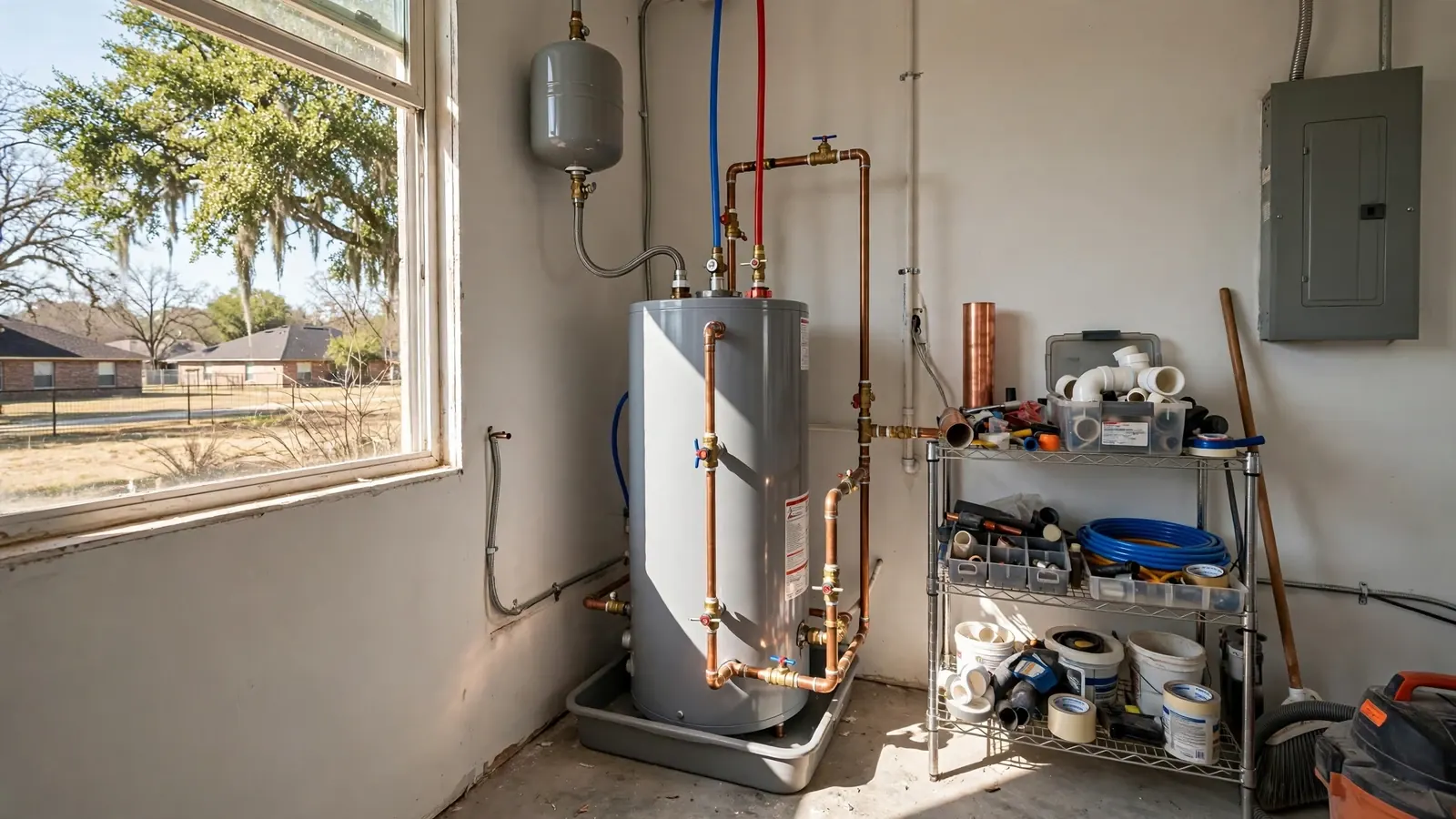
- Expansion controlA closed system needs a place for thermal expansion to go. An expansion tank handles it.
- Drain pan and drain lineA pan catches slow leaks and carries them to a safe spot.
- Seismic strappingTanks in earthquake country should be strapped to the wall. Padre Dam's hazard plan names the San Andreas and Elsinore faults as risks to the region.
- Proper ventingGas units need draft and clearances checked.
- Shutoff valve and unionsNew shutoffs and unions make future service easier.
Hard water and permits in Santee
Padre Dam Municipal Water District's 2023 water quality report lists hardness of roughly 9 to 18 grains per gallon depending on the plant. At that level, a drain valve for yearly flushing and an accessible anode rod are worth planning for at install time.
The City of Santee has a separate page for solar water heating permits, and it does not list conventional water heaters on its page about work not requiring a permit. Ask the Planning and Building department what your project needs, because permit rules vary.
Sources: Padre Dam Municipal Water District, 2023 Water Quality Report. City of Santee Planning and Building.
From quote to hot water
The path is short when the plan is clear.
- 1
Site visit or phone review
We confirm the unit location, fuel and size.
- 2
Select the unit
You pick a type, and the plumber orders or stocks it.
- 3
Install to code
Old unit out, new unit set, controls and venting verified.
- 4
Walk-through
You see the shutoffs, the drain valve and the pressure relief valve.
Choosing the right location
The location of a water heater affects its performance and its life. A garage is common, but a unit in a garage needs protection from vehicles and a raised platform where code requires it for gas models. An interior closet needs combustion air for gas units and room to service it.
Keep the unit near the fixtures that use the most hot water. Long pipe runs mean long waits and lost heat, and insulation on the first few feet of hot line helps. If you are moving the heater, tell the plumber early so the gas, water and vent routes can be planned together.
Code requirements for a new water heater
A new water heater is installed under the California Plumbing Code, based on the Uniform Plumbing Code (UPC). That covers the relief valve and discharge pipe, venting for gas units and a drain pan where a leak could damage finished space.
Ask the plumber about thermal expansion control and the permit. The City of Santee page on work not requiring a permit does not mention water heaters, so check with Planning and Building before the work begins.
What to do before installation day
A short checklist saves time on the day.
- Clear a pathOpen the way from the door to the heater.
- Know your shutoffsFind the main valve and the heater's cold supply.
- Check the spaceMeasure the closet or garage corner for the new unit.
- Plan for hot water gapsExpect several hours without hot water.
What affects the cost of installation
Price depends on the unit and the job.
Water heater installation questions
Size follows household size and peak use. A plumber checks number of bathrooms and fixtures and recommends a capacity.
Yes, subject to space and electrical capacity. We confirm on the site visit.
Many closed systems do. The plumber checks your pressure and recommends one if it applies.
If your heater has failed, call the 24/7 line. See water heater replacement.
Yes, though relocation adds plumbing and venting work.
A standard swap takes part of a day. Moving or converting takes longer.