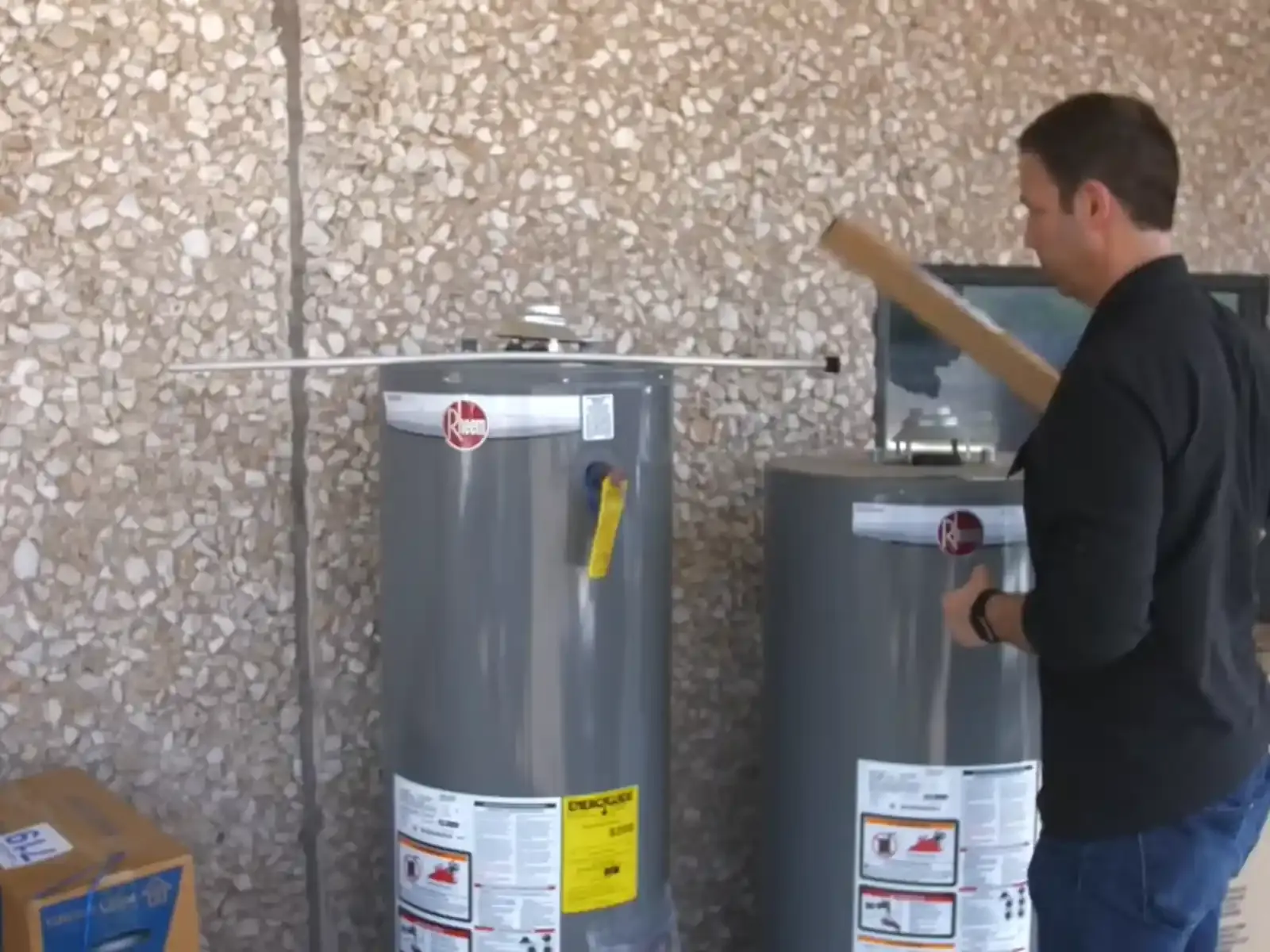
No hot water or a leaking tank right now
A heater that stops mid-shower is annoying. A tank that leaks is urgent. Call the 24/7 line either way, and we book a same-day visit when a technician is free. If water is pooling under the tank, shut the cold supply valve above it and, for a gas unit, turn the gas control to pilot or off.
Do not touch a tank that smells of gas. Leave the area and call your gas utility or 911 first, then call us.
What the symptom usually means
Most water heater trouble matches a short list of causes. A technician confirms the cause before repairing anything.
No hot water at all
Gas units often have a failed thermocouple or igniter. Electric units may have a tripped breaker or a dead element.
Lukewarm water
A failed lower element, a worn dip tube or heavy sediment can all do it.
Rumbling or popping
Sediment baked on the bottom of the tank boils and bangs. Flushing sometimes helps.
Water around the base
A leaking fitting can be repaired. A leaking tank body cannot.
Hard water and your tank
Padre Dam Municipal Water District's 2023 water quality report lists hardness of roughly 9 to 18 grains per gallon depending on the plant. Hard water drops minerals as it heats, which coats elements and builds sediment. The anode rod that protects the tank also wears faster in some water, and it is cheap to check.
If your heater is past ten years old and has never been flushed, a full tank of sediment may be the reason it struggles. A flush or an anode swap can add useful life if the tank is not already leaking.
Gas, electric or hybrid: what fails
Each type has its own weak points.
| Type | Common failures | Typical fix |
|---|---|---|
| Gas tank | Thermocouple, gas valve, pilot, vent draft | Replace the part, verify venting and combustion |
| Electric tank | Upper or lower element, thermostat | Replace the element or thermostat |
| Hybrid heat pump | Condensate drain, fan, sensor, filter | Clean or replace the part, check settings |
| Any tank | Leaking body or severe corrosion | Replace the unit, see water heater replacement |
Tankless units are covered on the tankless water heater page.
How a water heater repair visit works
The visit is built to answer one question: fix or replace.
- 1
Inspect the unit
The plumber checks age, venting, water connections and visible corrosion.
- 2
Test the failing part
Gas pressure, element resistance or thermostat settings tell what is bad.
- 3
Quote both paths
You see the cost of repair next to the cost of replacement so you can compare.
- 4
Repair and verify
Hot water is run and the unit is checked for safe operation.
Safety devices a repair must respect
A tank water heater is required to have a temperature and pressure relief valve with a discharge pipe, under the California Plumbing Code, which is based on the Uniform Plumbing Code (UPC). A repair should never cap, plug or bypass that valve.
Gas models also rely on the maker's instructions for venting and combustion air. A plumber follows those guidelines when testing the unit, and a failed test is a reason to stop and fix the cause.
What affects the cost of water heater repair
The price follows the part and the access.
Water heater repair questions
Yes, the line is open 24/7. A leaking tank gets priority, and a licensed plumber is sent as soon as one is free, with same-day visits when available.
A small part such as an element or thermocouple is often worth replacing. A leaking tank body or heavy corrosion usually means replacement. See water heater replacement.
Yes, for common faults. Hybrid units are more complex, so the plumber will tell you if a part must be ordered.
Many manufacturers suggest flushing yearly. In hard water, annual flushing helps limit sediment.
The City of Santee's page on work not requiring a permit does not mention water heaters. Ask the Planning and Building department about your repair.
Leave the building and call 911 or your gas utility. Do not use switches or phones inside. Call us afterward for repair.