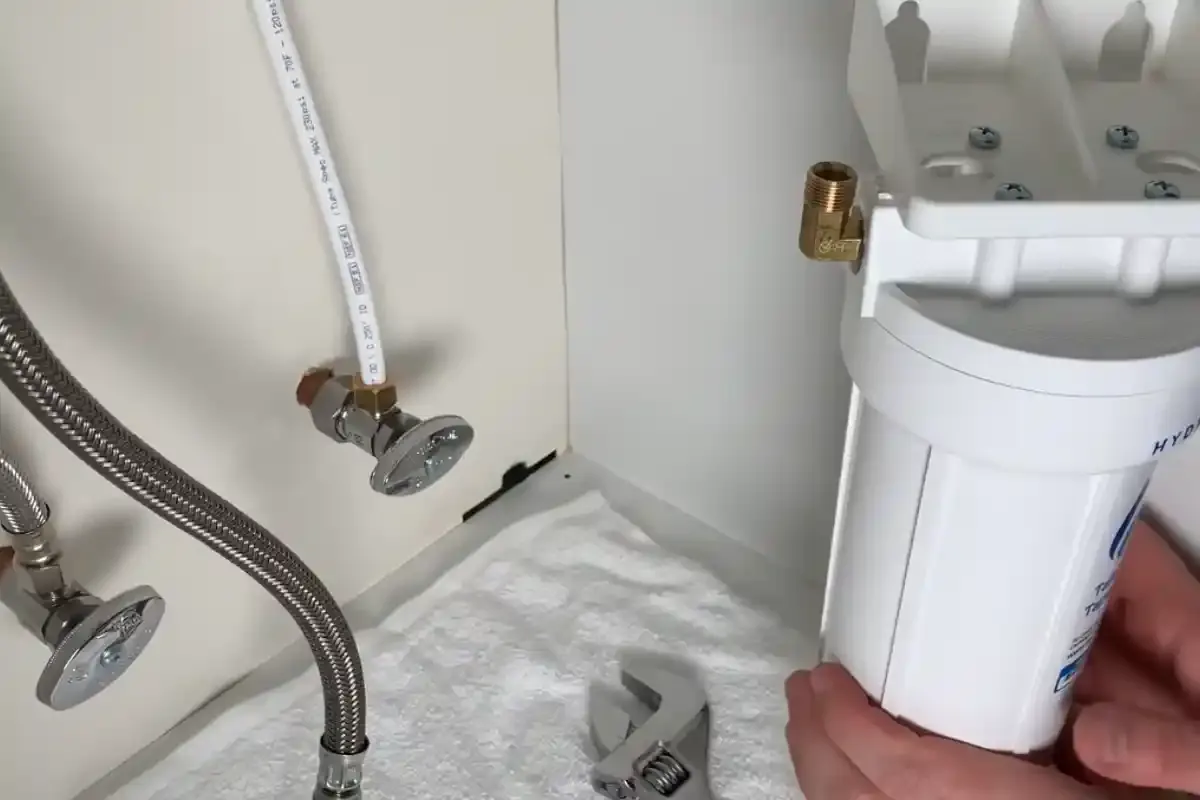
The short answer
A whole-house filter does not soften water. It reduces sediment, chlorine or chloramine taste and some other contaminants, depending on the media. Hard water is dissolved calcium and magnesium, and removing it takes a softener or another scale-control system.
For Santee homes, the question usually comes down to two goals: protecting appliances from scale and improving taste. Scale calls for a softener. Taste calls for a carbon-based filter. Some homes want both, and the plumber can plan them to work together.
Filter, softener or both
Compare what each system does.
| System | Targets | Does not do |
|---|---|---|
| Sediment filter | Sand, rust flakes, grit | Hardness or taste |
| Carbon filter | Chlorine and chloramine taste, odors, some chemicals | Hardness |
| Salt-based softener | Calcium and magnesium scale | Taste or most contaminants |
| Reverse osmosis at a tap | Drinking and cooking water at one faucet | Whole-house treatment |
Check the product specs for what a given filter is tested to remove.
What the local report says
Padre Dam Municipal Water District imports its supply, and its 2023 water quality report lists hardness by treatment plant. At one plant the range is about 150 to 316 parts per million, which is roughly 8.8 to 18.5 grains per gallon. At another plant it is 165 to 291 ppm, and a desalination plant source is lower at about 44 to 80 ppm.
The plant that supplies your tap shifts over time, so your hardness varies. A simple test strip or a plumber's test gives you a reading at your faucet. That number, not the district range, is what you size a softener to.
Chloramine and filter choice
The district reports chloramine as its disinfectant. Chloramine does not leave water as easily as chlorine, and some carbon filters remove it more slowly. If taste is the goal, ask for catalytic carbon or a media rated for chloramine, and size the unit for your household flow.
The district also states that its water meets all federal, state and local regulations. A filter is a choice for taste or equipment protection, and nothing on this site suggests your water is unsafe.
How a filtration project goes
A good job starts with the goal.
- 1
Define the goal
Taste, scale, sediment or all three.
- 2
Test the water
Measure hardness at the tap and note any visible sediment.
- 3
Pick the system
Match media and capacity to flow and hardness.
- 4
Install with bypass valves
Bypass valves let you service the system without shutting off the house.
- 5
Set a service schedule
Cartridges and salt need regular replacement.
Signs you may want treatment
These signs show up in many Santee homes.
White crust on faucets
A classic hardness sign.
Cloudy glassware
Mineral spots after the dishwasher.
Short heater life
Scale coats elements and builds sediment.
Chlorine-like taste
A filter may help with taste.
What to ask before buying a system
Start with the goal and work backward. If scale is the issue, ask about softening capacity and salt use. If taste is the issue, ask about carbon media and whether it is rated for chloramine. If both matter, ask how the two units will be installed and serviced.
Ask about service costs too. Filters need cartridge changes on a schedule, and softeners need salt. A system with expensive or hard-to-find consumables is a poor value, no matter how good the upfront price looks.
Where the equipment goes
Whole-house equipment installs on the main line after the shutoff and before the water heater and branches. A garage is a common spot, with space for the unit, a drain for the softener and an outlet nearby. Bypass valves let you service the system without shutting off the house.
A plumber can also advise on a separate drinking water tap. A small reverse osmosis unit under the kitchen sink polishes drinking water without treating all the water in the house. Some households choose that instead of a whole-house filter.
Living with hard water if you do nothing
Hard water is not a health hazard. It is a maintenance cost. You descale faucets and showerheads, flush the water heater and accept a shorter appliance life. Some households decide that is fine, and that is a reasonable choice.
Others decide a softener pays for itself in fewer repairs and cleaner fixtures. The deciding factor is your own tolerance, your equipment and your plans for the house. A short plumbing visit can lay out each path so you choose with real numbers.
Standards that matter when you shop
Look for NSF/ANSI 42 for taste and odor, NSF/ANSI 53 for health-related contaminants and NSF/ANSI 44 for softeners. A product marked with the standard has been tested for the claim on the box.
Installation follows the California Plumbing Code, based on the Uniform Plumbing Code (UPC), including a bypass and backflow protection where needed.
What to do before you buy a system
Four checks save money.
- Read your water reportThe district report lists hardness and the disinfectant used.
- Decide what you want to fixScale, taste and sediment need different equipment.
- Check the spaceThe unit needs room, power and a drain.
- Ask about upkeepCartridges and salt are ongoing costs.
Santee note: permits and equipment protection
The City of Santee's page on work not requiring a permit does not mention water treatment equipment, so ask Planning and Building if your project involves new plumbing. A softener needs a drain and a power outlet, and many installs are in garages near the water heater.
Hard water also shortens the life of tankless heaters. If you own one or plan one, a softener or a regular descaling routine is worth budgeting. See tankless water heater service for how a flush works.
Sources: Padre Dam Municipal Water District, 2023 Water Quality Report and Water Quality page. City of Santee Planning and Building.
Hard water in your home?
Call the 24/7 line to plan treatment.
Whole-house filtration questions
Padre Dam's 2023 report lists hardness by plant, from about 9 to 18 grains per gallon at two main plants. Test your tap to know yours.
No. A softener or scale-control system does that.
No. It is a preference for taste or equipment protection.
Yes. They are installed in sequence, and the plumber plans the order.
Yes. See our El Cajon page and water softener and filtration.