The short answer
Try a plunger first, then a closet auger. Use a liquid clog remover only for a slow drain with no standing water, and never in a bowl that is full or overflowing. The chemical works best on organic buildup, not on a solid object, and it can sit in the bowl for hours without reaching the blockage.
If the toilet is full and not draining, skip the liquid. It will not reach the clog, it makes a later plumber visit more hazardous, and it can splash back on skin. Stop flushing, close the supply valve and use mechanical tools.
When a liquid remover is reasonable
These cases are the exceptions.
- A slow drain with no standing waterThe product can reach and loosen organic buildup.
- A first attempt after a failed plungeOnly if the bowl is not full, and only once.
- A product labeled safe for toiletsMany drain openers are not rated for toilets. Read the label.
- Good ventilationFumes can irritate. Open a window and avoid mixing products.
- Old pipes in good shapeThe chemical can be harsh on some pipe finishes. Skip it if unsure.
Tools in order of safety
Start with the lowest-risk tool.
| Tool | Use for | Risk |
|---|---|---|
| Flange plunger | Most toilet clogs | Low |
| Closet auger | Deeper clogs, toys, thick paper | Low if used gently |
| Enzyme or bacteria cleaner | Slow drains, maintenance | Low, slow results |
| Chemical liquid | Slow organic buildup only | Skin and fume risk, can sit in bowl |
| Plumber with a drain cable | Repeated clogs or multiple drains | Handled by a professional |
A drain cable can clear what a plunger cannot. See drain cleaning for the options.
What to do when the bowl is full
A calm sequence works better than repeated flushing.
- 1
Stop flushing
Each flush adds water to a full bowl.
- 2
Close the supply valve
The valve on the wall behind the toilet, turned clockwise.
- 3
Use a flange plunger
Make a seal and push and pull firmly for a minute.
- 4
Try a closet auger
Feed it gently, turn the handle and pull out what it catches.
- 5
Call if it will not clear
If other drains are slow too, the problem is the main line.
Why liquids are not a cure-all
Most toilet clogs are a wad of paper or wipes, a toy or a buildup of mineral and waste in the trap. A liquid dissolves little of that. It also sits in a pool because the bowl is water-filled, so its strength drops as it dilutes.
Wipes labeled flushable cause many blockages. They do not break down like paper, and they collect at bends. Keep wipes out of the toilet and the line stays open longer.
Why toilets clog in the first place
Most toilet clogs begin with something the bowl cannot carry through the trap. Thick toilet paper, wipes, paper towels and cotton products do not break up fast enough, and they lodge at the narrowest bend. Newer toilets use less water per flush than older models, so there is less water to push that material along.
A partial clog gives warning signs. The bowl drains slowly, gurgles or needs a second flush. Treat those signs seriously, because a partial clog often becomes a full one on a busy day.
What should never go down a toilet
These items cause a large share of calls.
Wipes labeled flushable
They hold together in the pipe and collect at bends.
Paper towels and tissues
Thicker fibers do not break down like toilet paper.
Feminine products and cotton swabs
They swell or catch on rough pipe walls.
Grease and cooking oil
They cool and coat the line farther down.
Using a plunger and an auger well
A flange plunger, the kind with a rubber extension below the cup, seals the toilet outlet better than a flat sink plunger. Set it in the bowl opening, push down gently to avoid splashing, then pull and push firmly for about a minute. Water should start to drop with a sucking sound when the clog breaks.
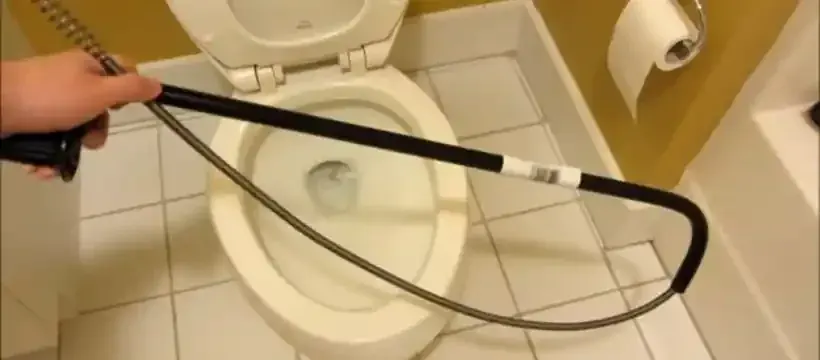
If the plunger fails, a closet auger reaches farther. Feed the cable until it stops, turn the handle to hook or break the clog and then pull back slowly. Rinse the tool in a utility sink and wear gloves. If the auger meets no resistance and the bowl still does not drain, the blockage is farther down the line.
Keeping the line clear afterward
Use moderate toilet paper and keep wipes in the trash. If a toilet clogs more than a couple of times a year, ask a plumber to check the trap, the flange and the vent. A blocked vent stops air from entering the line and slows drainage, and it looks just like a clog.
Tree roots in the yard line also cause repeat backups. If several fixtures slow together, call a plumber for a drain cable and a camera look. See sewer inspection for how the camera works.
Label guidelines and safety
Follow the label guidelines on any liquid remover. Wear gloves and eye protection, never mix products and keep children and pets away. The U.S. Consumer Product Safety Commission advises against mixing household cleaners because the fumes can be dangerous.
A plumber uses an auger or a closet auger instead of chemicals, and the California Plumbing Code, based on the Uniform Plumbing Code (UPC), sets how the toilet and flange are installed, which affects how a clog clears.
Santee note: sewer service and who to call
Wastewater from Santee flows through Padre Dam Municipal Water District's collection system to its influent pump station, then on to treatment. Your plumbing connects to the district main through a private lateral. If several homes on your street back up at once, call the district.
The City of Santee's page about work not requiring a permit says that clearing blockages, and removing and reinstalling a toilet, are exempt as long as valves, pipes and fixtures are not replaced or rearranged. That covers most clog work. Ask Planning and Building about anything bigger.
Sources: Padre Dam Municipal Water District hazard mitigation annex (San Diego County, 2023). City of Santee, Work Not Requiring a Building Permit.
Toilet still clogged?
Call the 24/7 line for toilet and drain help.
Toilet clog questions
Only products labeled for toilets, and only when the bowl is not full. Never mix products.
A partial blockage in the trap or line, a low-flow model, or heavy wipe use. See toilet repair for diagnosis.
Wait. Flushing again can overflow the bowl.
They help maintain slow drains over time. They do not clear a solid blockage.
Yes. See our El Cajon page for details and ZIP codes.