The short answer
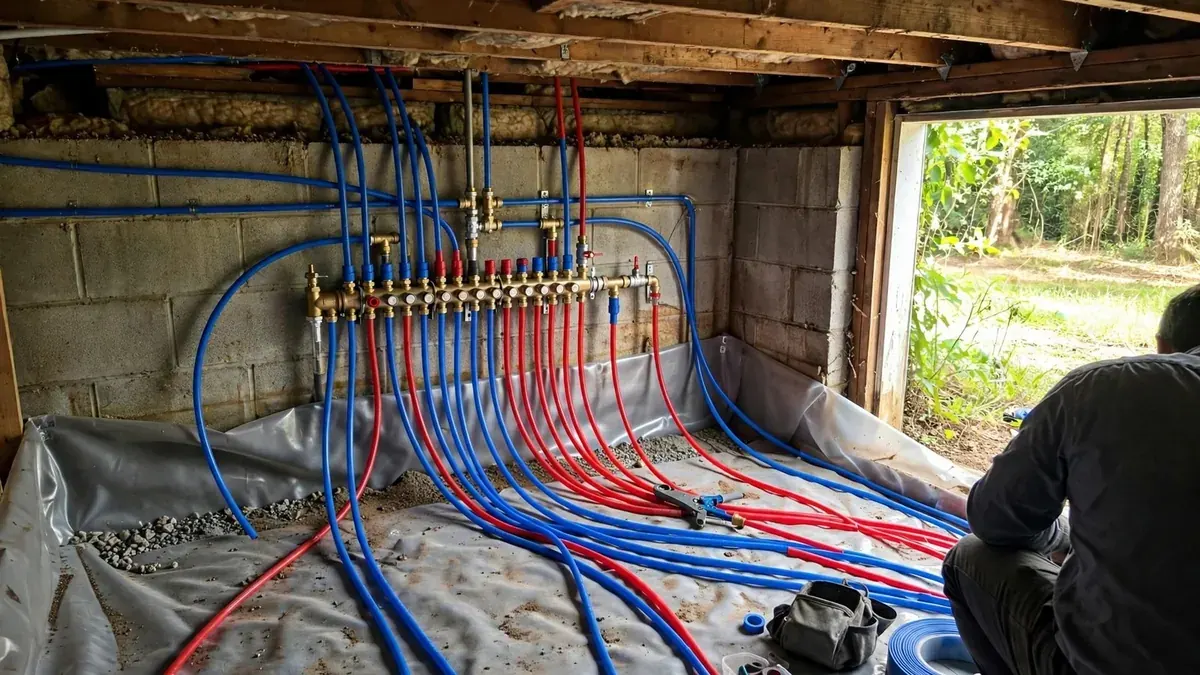
PEX is the faster and more flexible choice, and it is widely used for new work and repipes. Copper has a long track record and handles heat well, but it takes more labor. Neither is automatically better. The right pick depends on access, water chemistry, budget and what the plumber finds inside your walls.
If you are repiping because old pipes leak, either material solves the problem. The bigger decision is the scope: whole-house, partial or a single branch. A plumber who looks at the house can quote each option and explain the trade-offs.
PEX and copper side by side
A fair comparison covers more than price.
| Factor | PEX | Copper |
|---|---|---|
| Installation | Flexible tubing, fewer fittings, quicker runs | Rigid pipe, more fittings, more labor |
| Heat and sunlight | Needs protection from sun and some chemicals | Tolerates heat, fine in sunlight |
| Track record | Decades of use in homes | Many decades of use |
| Water chemistry | Not subject to pinhole corrosion | Can pinhole in some waters |
| Noise | Can need clips to reduce movement noise | Rigid, steady |
| Repair | Simple fittings | Needs soldering or press tools |
Ask the plumber which fitting system they use, since that affects long-term reliability.
What your walls and pipes tell the plumber
Before choosing, the plumber checks what you have now. Galvanized steel, polybutylene, old copper and CPVC all fail in different ways, and the answer to "what next" starts with what failed. The plumber also looks at access, since an attic or a crawlspace makes any material easy to run.
In a slab house, new lines often go through walls and attic instead of under the slab, so you are not cutting concrete. That route works for either material, and it often leads to a "reroute" rather than a full repipe. See slab leak repair for how that works.
Water chemistry and pinholes
Padre Dam Municipal Water District imports its water and reports hardness of roughly 9 to 18 grains per gallon depending on the plant, with chloramine as the disinfectant. Hardness leaves scale and can matter for fixtures. Whether a given copper line pinholes depends on the pipe, the soil, the water and the installation, so no one can promise it will or will not.
If copper in your home has pinholed more than once, tell the plumber. A PEX repipe avoids that failure mode, and a plumber can also look at grounding and installation details that sometimes contribute.
Planning around the work
A repipe is easier on the household when it is planned. Ask for a schedule that tells you when water will be off and for how long. Decide where to stay during any large wall work and move fragile items out of the way.
Ask the plumber how openings will be made and patched. A careful crew uses attic and crawlspace access where it can, and it patches drywall neatly or tells you which trade to call for finishing. Paint and texture matching are often separate, so plan for them in your budget.
Questions to ask any plumber about a repipe
These questions separate a clear plan from a vague one.
Which fittings do you use?
Fitting systems differ in reliability, and the answer shows how the plumber works.
How will walls be opened and patched?
You should know the plan before work begins.
What will inspection involve?
Permit and inspection timing affect the schedule.
What happens if you find a surprise?
Hidden damage can change scope. Ask how it is handled and priced.
Noise, expansion and other day to day differences
Copper is rigid and can carry sound when pipes are loose in their supports. Flexible tubing is quieter and bends around corners with fewer joints. Both need proper supports and sleeves where they pass through framing.
Hot lines expand when heated, and installers allow room for the movement. Ask how the plumber plans for it, because a good answer shows attention to detail.
Standards behind each material
PEX tubing is made to ASTM F876, copper tube to ASTM B88, and both should carry NSF/ANSI 61 marks for drinking water use. The California Plumbing Code, based on the Uniform Plumbing Code (UPC), lists the approved fittings and installation rules for each.
Ask the plumber for the markings on the tube and the fitting system. Mixing parts from different systems is a common cause of leaks.
Santee note: age of the housing and permits
Santee grew from under 2,000 people in 1950 to 25,750 in 1970, and it incorporated in 1980. Many homes were built in that window, so supply lines in them may be five decades old or more. A repipe can make sense when leaks have started to repeat.
The City of Santee's page on work not requiring a permit says replacing a failed concealed water pipe is new work that needs a permit. A repipe is more than that, so ask Planning and Building what your project needs and schedule any inspection with the plumber.
Sources: City of Santee history page, City of Santee, Work Not Requiring a Building Permit. Padre Dam Municipal Water District, 2023 Water Quality Report.
From decision to new pipe
A repipe runs in four stages.
- 1
Survey
The plumber maps lines, fixtures and shutoffs.
- 2
Quote options
You see PEX and copper side by side.
- 3
Install
New lines go through attic, crawlspace and walls with small openings.
- 4
Test and restore
The system is pressure tested before patching.
Considering a repipe?
Call the 24/7 line for an on-site look.
PEX and copper questions
PEX is widely used in homes for potable water. Choose products certified for drinking water and use proper fittings.
Both can last for decades when installed well. The failure modes differ.
Yes. A partial repipe replaces the worst lines. See repiping for options.
Replacing concealed pipe generally does. Ask the City of Santee Planning and Building department.
Yes. See our El Cajon page for details.