Why a slab leak is an emergency
Water under a slab washes out soil, raises the water bill and can stain flooring from below. Call the 24/7 line if you hear water under the floor, feel warm tile, or the meter spins with everything off. Same-day visits are booked when available.
Close the main water valve to stop the loss, then use the hot water sparingly or not at all until a plumber confirms which line is leaking. If the water heater is on a slab line, switch it to vacation mode so it does not run dry.
Symptoms of a slab leak
Slab leaks usually announce themselves in a few ways.
- A warm or hot floor spotA leak in a hot line warms the concrete above it.
- Hissing under the floorQuiet rooms at night make the sound easy to hear.
- Meter runs with taps offThe classic sign of any hidden leak.
- Cracks or damp flooringWater pushing up through the slab can swell wood floors and lift carpet.
- Low hot water pressureA leak in the hot line steals water before it reaches fixtures.
Why slabs leak in older Santee homes
Many Southern California homes were built on concrete slabs, with water lines running through or under the foundation. Santee added a lot of housing between 1958 and 1980, so supply lines under slabs may now be fifty years old or older. Over decades, copper can develop pinholes, and the cause varies by pipe, soil and water chemistry.
Padre Dam Municipal Water District disinfects with chloramine and reports hardness of roughly 9 to 18 grains per gallon depending on the plant. A plumber does not blame the water for a leak, but a pattern of pinholes in one home is worth noting to the plumber.
Three ways to fix a slab leak
The right path depends on the pipe, the number of leaks and the floor finish.
| Option | How it works | Best when |
|---|---|---|
| Spot repair | Cut the slab above the leak and replace the damaged section | One leak, sound pipe elsewhere |
| Reroute | Abandon the slab line and run a new line through walls or attic | Several leaks, or a hard-to-reach line |
| Repipe | Replace the supply system, see repiping | Widespread pinholes and failing pipe |
A plumber confirms the line with detection first. See leak detection for the tools involved.
How we handle a slab leak
The work is sequenced to protect the floor.
- 1
Isolate and test
The main shutoff stops the loss. Pressure tests show which line is leaking.
- 2
Pinpoint
Acoustic and thermal tools mark the leak within a small area.
- 3
Explain the options
You see the numbers and trade-offs for spot repair, reroute and repipe.
- 4
Repair and restore
The plumber repairs the line and re-tests. Floor repairs are coordinated with the right trade.
Standards the plumber works to
Slab leak repairs follow the California Plumbing Code, based on the Uniform Plumbing Code (UPC), with a pressure test to confirm the repair holds. Materials that carry drinking water should be certified to NSF/ANSI 61.
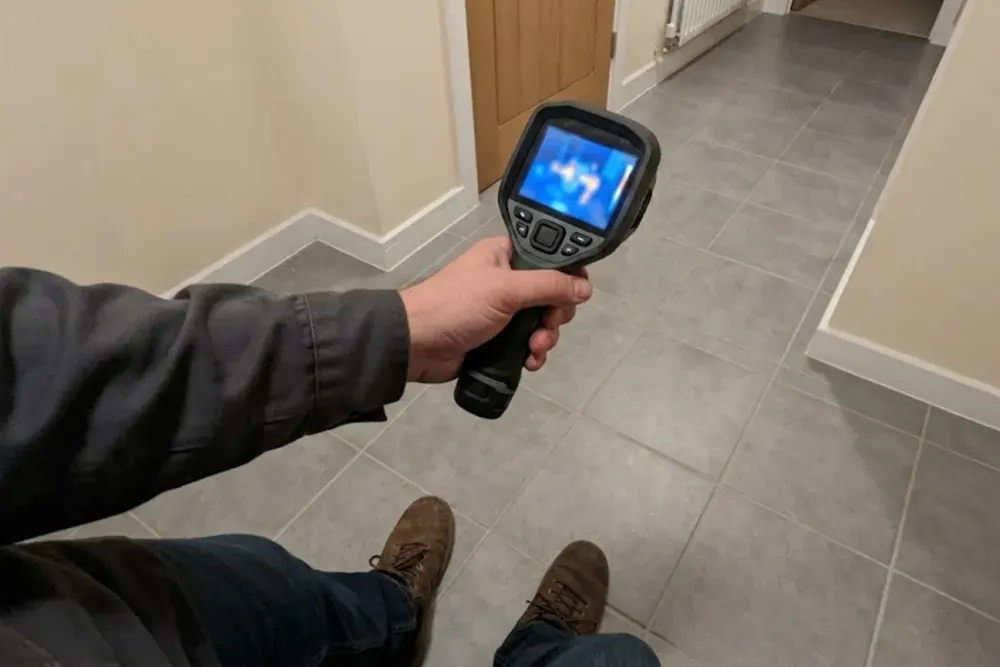
Detection comes first. Acoustic and thermal tools find the spot, and the plumber explains the options before any concrete is cut.
What to do if you suspect a slab leak
Act early to limit damage.
- Check the water meterWith every fixture off, a moving dial means water is escaping.
- Shut off the main valveClosing it stops the loss while you wait.
- Turn off the water heaterThis keeps the tank from running dry.
- Move belongings off damp floorsRugs, boxes and furniture should come up first.
What affects the cost of slab leak repair
Slab work has more variables than ordinary plumbing.
Slab leak questions
Yes. The 24/7 line is open. We send a licensed plumber as soon as one is free, with same-day visits when available, and the dispatcher can help you shut off the main.
The City of Santee says replacing a failed concealed water pipe is new work that requires a permit. Ask the Planning and Building department about your project.
Coverage depends on the policy and the cause. Ask your insurer, and keep the detection report we give you.
No. Even a slow leak wastes water, can undermine soil under the slab and can lead to mold.
If several leaks have appeared or the pipe is old throughout, a repipe can cost less over time than repeated repairs. See repiping.
With acoustic microphones and thermal imaging, followed by a pressure test. See leak detection for details.