The short answer
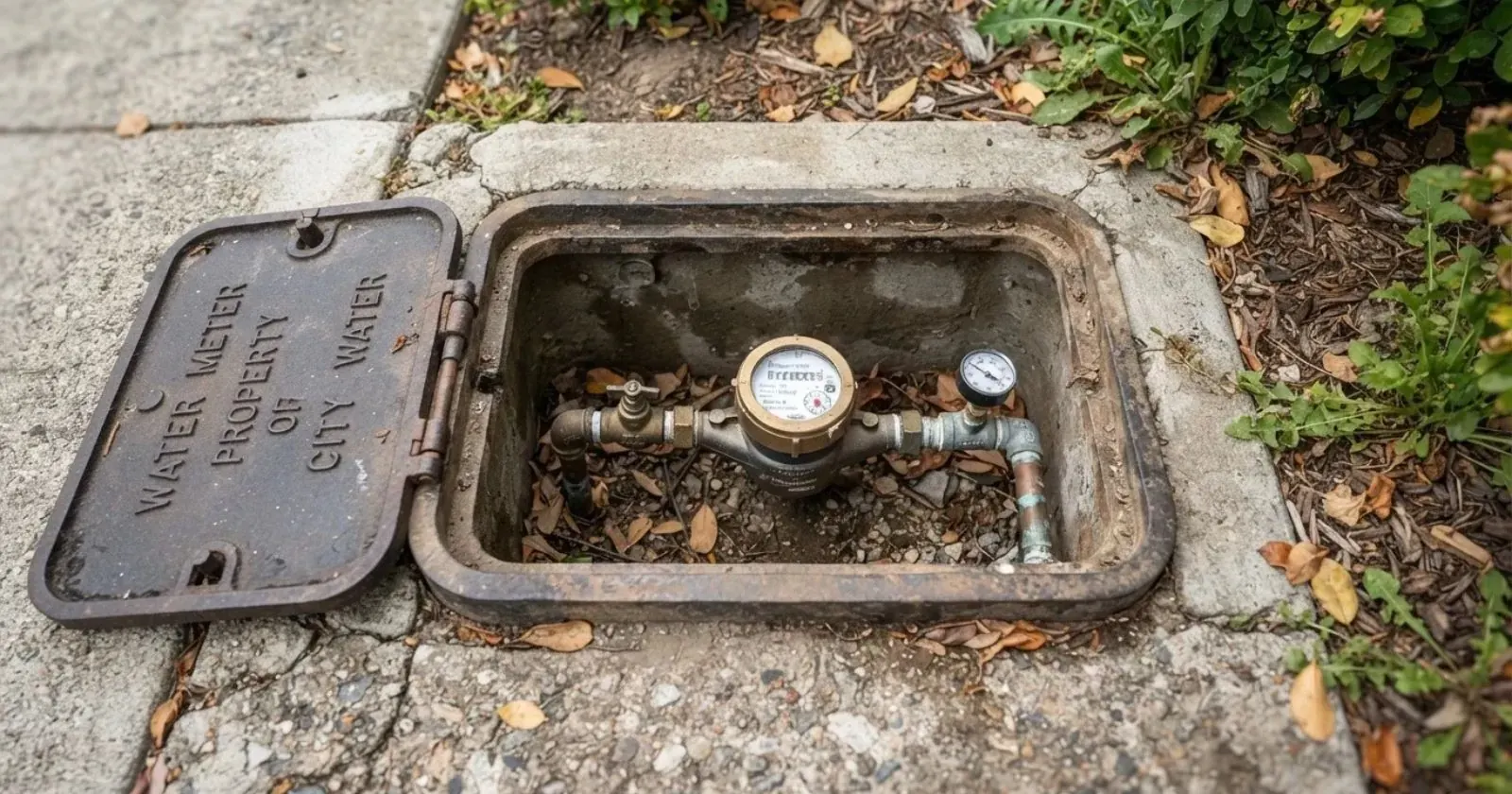
Turn off every tap and appliance, then watch your water meter. If the dial or the small leak indicator keeps moving, water is escaping somewhere. Next, test toilets with a few drops of food coloring in the tank. If color shows in the bowl without flushing, the flapper is leaking.
Those two checks catch most household leaks. If the meter still moves after you rule out toilets, irrigation and fixtures, the leak is in a pipe you cannot see, and a plumber with acoustic and thermal tools can find it without cutting walls.
The meter test
This takes about fifteen minutes.
- 1
Stop all water use
No taps, no dishwasher, no washer, no ice maker cycling.
- 2
Find the meter
It is usually in a box near the curb or the front of the lot. Lift the lid carefully.
- 3
Read it and wait
Note the reading or the position of the small leak indicator. Wait fifteen to thirty minutes.
- 4
Read again
Any change means water is moving. Close the main valve at the house and check again. If it stops, the leak is inside the house, and if it keeps moving, the leak is before the valve.
Other signs to check
Leaks often show in the details.
- Higher water billA sudden rise with no change in habits.
- Sound of water in quiet roomsA faint hiss or trickle when nothing is on.
- Warm spots on the floorA hot line may be leaking under a slab.
- Stains or musty smellBrown rings on ceilings or damp odor in closets.
- Green or wet patches outdoorsA buried line may be leaking near the meter or the house.
Common leak sources and tests
Match the sign to the place.
| Where | Likely source | Test |
|---|---|---|
| Toilet | Flapper or fill valve | Dye in the tank, wait ten minutes |
| Under sinks | Supply line or trap | Dry paper towel on connections |
| Water heater | Relief valve or fittings | Look for drips and rust at the base |
| Irrigation | Valve or line break | Turn off irrigation, recheck the meter |
| Slab or wall | Pinhole in a pipe | See slab leak repair |
Hidden leaks need tools. Leak detection uses acoustic and thermal methods.
Why a small leak is worth chasing
A pinhole that loses a few drops a minute adds up to a lot of water over a month. It also feeds mold in wall cavities and undermines soil under slabs. A small leak is almost always cheaper to fix now than later.
If you find a leak that is actively spraying, close the main valve and call. A pipe that is wet but not spraying can often wait until the next business day, though the line is open 24/7 if you prefer to know now.
Reading your bill the right way
Your water bill lists usage in units, and the statement defines what one unit means. Compare the last few months, not just one. A steady climb with no change in household size or irrigation is the pattern that points to a hidden leak.
Seasonal changes matter. Irrigation raises summer use, so compare the same month from last year when you can. A jump that outpaces the season deserves a meter test.
Irrigation and outdoor leaks
Sprinkler valves stick, heads break and drip lines get chewed. These leaks run quietly and add up. Shut off the irrigation controller and recheck the meter. If the dial stops, the leak is in the irrigation system.
A wet patch of lawn or a cracked driveway edge near the meter can point to a service line leak. Do not dig. Call a plumber, because buried lines need locating before any excavation.
What a professional visit adds
A leak detection visit goes beyond the meter test. The plumber pressure tests the system to confirm a leak and which side it is on, listens with acoustic microphones at floors and walls, and scans with a thermal camera for temperature patterns.
Two methods agreeing on the same spot justify opening a small access hole. That keeps demolition tight and cost down. See leak detection for how the visit runs, and burst pipe repair if a pipe has failed outright.
How a leak is confirmed
Plumbers confirm a hidden leak with the meter test, then with acoustic and thermal tools, and finally with a pressure test. Repairs are made under the California Plumbing Code, based on the Uniform Plumbing Code (UPC).
Keep the meter reading and the date. Utility guidelines and insurers both look for a record of when you first noticed a change.
Santee note: the meter, hard water and water mains
Padre Dam Municipal Water District serves Santee with about 393 miles of water mains in its service area. In general, the district maintains the main and the meter, and the owner maintains the line from the meter to the house. Ask Padre Dam where responsibility changes at your lot if the leak is near the meter.
The district's 2023 report gives hardness of roughly 9 to 18 grains per gallon by plant. Scale can stiffen shutoff valves and toilet fill valves, which are common places for slow leaks to start. A quick look at those valves is worth doing when you check for leaks.
Sources: Padre Dam Municipal Water District hazard mitigation annex (San Diego County, 2023). Padre Dam, 2023 Water Quality Report.
Think you have a leak?
Call the 24/7 line for leak detection.
Leak detection questions
Close the main valve at the house and check the meter. If it still moves, the leak is outside, between the meter and the house.
Often yes. A steady increase with no change in use is a strong clue.
Warm floor spots and a moving meter are clues, but pinpointing needs tools.
It varies with the number of zones, access and tools. We give a clear price before work starts.
Yes. See our El Cajon page for details and ZIP codes.