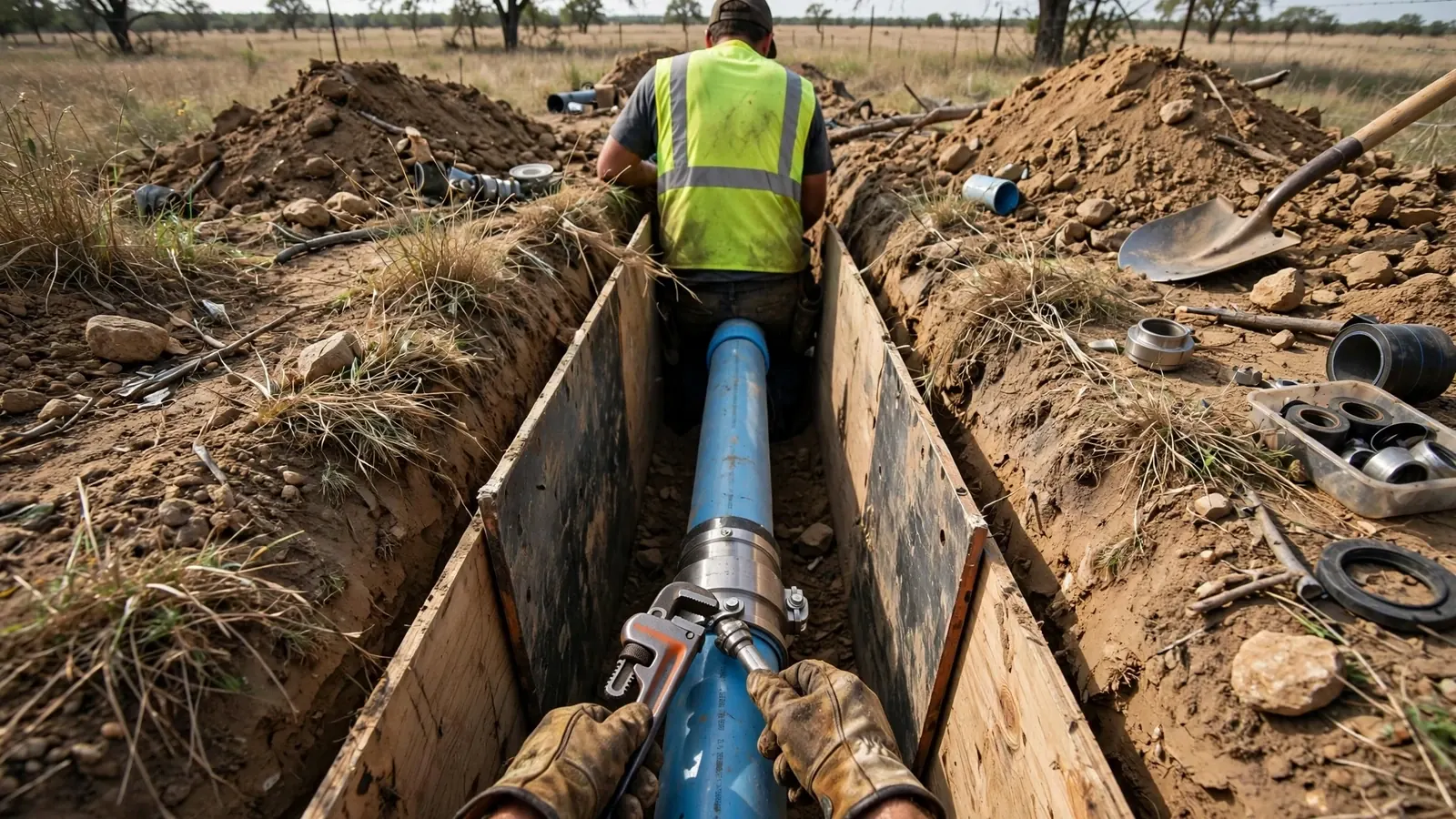
When a service line leak needs a fast response
A leaking service line wastes treated water, softens soil and can undermine paving. If the yard is soggy, pressure has dropped, or the meter spins with the house shut off, call the 24/7 line. We schedule same-day visits when available.
Close the house shutoff valve to see whether the meter still turns. If it does, the leak is outside, and the plumber will confirm where.
Signs the service line is leaking
Service line failures show up outside before inside.
- Wet or sunken groundA patch that stays wet in dry weather, often between the meter and the house.
- Pressure dropWeak flow at every fixture suggests a loss before the house.
- Meter moves with the main offClosing the house valve and seeing movement points to the buried line.
- Rising billsUnexplained increases in usage on a steady household.
- Discolored or dirty waterPipe damage can let sediment in during pressure changes.
Who owns what between the meter and the house
Padre Dam Municipal Water District maintains about 393 miles of water mains across its service area, including Santee. In general, a utility maintains the main and the meter, and the owner is responsible for the line from the meter to the house. Ask Padre Dam where responsibility changes on your property before any digging.
Call 811 before any excavation near buried lines. A plumber will arrange this as part of a service line job.
Source: Padre Dam Municipal Water District hazard mitigation annex (San Diego County, 2023).
Repair or replace the service line
The choice turns on the pipe material, the length and the damage.
| Option | Method | Best when |
|---|---|---|
| Spot repair | Dig down and replace a short section | A single leak, sound pipe elsewhere |
| Replacement in a trench | Lay new pipe along the old path | Old, corroded or multiple leaks |
| Trenchless replacement | Pull new pipe through the old path | Driveways, landscaping or hardscape to preserve |
A pressure test and leak location come first. See leak detection.
How a service line job runs
Careful sequencing reduces yard damage.
- 1
Locate the leak
Pressure testing and acoustic tools find the problem area.
- 2
Confirm utility boundaries
The plumber checks the meter and shutoff and the line path.
- 3
Excavate or pull
The damaged section is exposed, or new pipe is pulled through.
- 4
Test and backfill
The new section is pressure tested before the trench is closed.
Who owns the pipe, and which rules apply
The service line between the meter and your house is generally the owner's responsibility, while the meter and the main belong to the water district. Repairs follow the California Plumbing Code, which is based on the Uniform Plumbing Code (UPC), and trench work may need a permit.
Call before you dig. California's 811 system, run through Underground Service Alert, marks buried utilities for free, and a plumber will not trench before they are marked.
What to do when the service line is leaking
Steps that limit damage outside the house.
- Find the meter shutoffClosing it at the meter stops the loss, if the valve works.
- Check for wet groundA soft patch or a pool of water near the meter points to the line.
- Do not digBuried gas, power and communication lines may be close by.
- Call the district for the meter sideThe plumber handles your side of the meter.
What affects the cost of service line work
Cost follows length, depth and surface.
Water service line questions
Yes. The 24/7 line is open. We send a licensed plumber as soon as one is free, with same-day visits when available, and we help you shut off the house valve.
Shut off the main valve at the house and check the meter. If it still moves, the leak is in the service line. See burst pipe repair for leaks inside the house.
The City of Santee says replacing concealed water pipe is considered new work that needs a permit. Ask the Planning and Building department about your job.
It disturbs far less than a full trench, though access pits are still needed at each end.
The line from the meter to the house is generally the owner's. Ask Padre Dam to confirm where responsibility changes for your lot.
Low pressure can come from the line or from a failing regulator. A technician tests both.