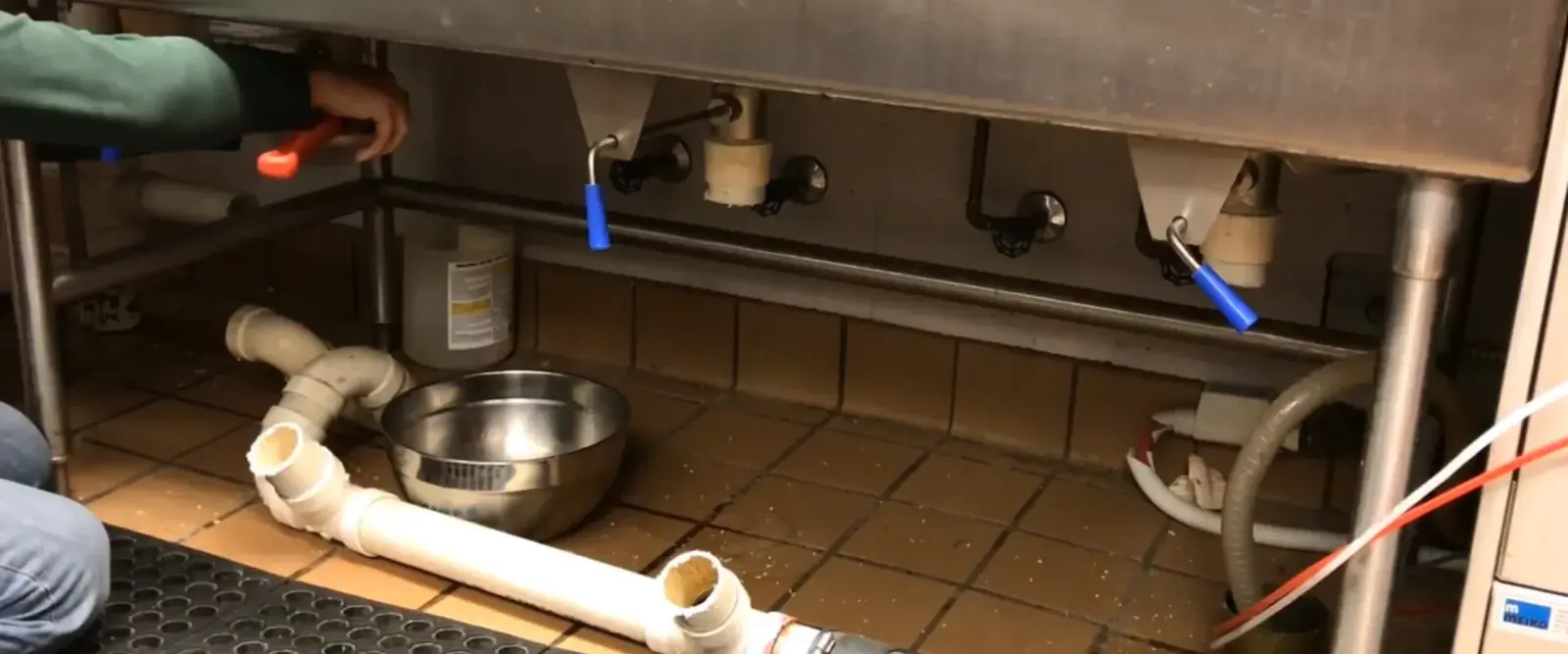
When a business plumbing problem cannot wait
A blocked restroom or kitchen line can shut a business for the day. Call the 24/7 line and describe what is happening. We book same-day visits when a technician is free, and after-hours calls are handled like any other.
While you wait, close the affected area to customers and stop using fixtures on that line. Note which drains and fixtures are involved so the plumber can start with the right tools.
Commercial corridors in Santee
Santee's city page describes a 700-acre Town Center district with business parks, housing and retail, plus a Metropolitan Transit System trolley station beside the Santee Trolley Square complex. Mission Gorge Road holds retail centers such as Santee Trolley Square and Mission Gorge Square.
Multi-tenant buildings share drain lines, so one tenant's clog can back up into another. The plumber identifies which line serves which space, which saves time when several businesses are affected. For the district itself, see plumbing in Santee Town Center.
Sources: City of Santee, About Santee page.
Common commercial calls
Business plumbing differs from residential work.
Restaurant drains and floor sinks
Grease, food scraps and heavy use cause repeat clogs.
Restroom backups
Multiple fixtures on one line, high use, and flushed items.
Water heater failure
Larger units for kitchens or salons.
Leaks in suspended ceilings
Hidden supply or drain leaks that stain tiles and fixtures.
Grease traps, storm drains and backflow
These three items often come up for commercial sites.
| Service | What it is | Who needs it |
|---|---|---|
| Grease trap cleaning | Pumping and cleaning an interceptor that catches fats and oils | Restaurants, bakeries, cafeterias |
| Storm drain cleaning | Clearing runoff drains in lots and loading areas | Retail centers, warehouses |
| Backflow testing | Annual test of devices that protect the water supply | Irrigation, fire lines, kitchens |
Ask Padre Dam Municipal Water District or the City of Santee what inspections apply to your site. See hydro jetting for grease-coated lines.
How a commercial call works
The visit aims to restore service quickly.
- 1
Triage by phone
Dispatch asks which fixtures and which tenants are affected.
- 2
Locate the blockage
The plumber finds the shared line or fixture involved.
- 3
Clear and test
Equipment clears the line. Fixtures are tested.
- 4
Recommend maintenance
Grease, jetting or camera follow-up is suggested if the cause is chronic. See sewer inspection.
Keeping a business plumbing system healthy
Scheduled maintenance costs less than emergency calls for most businesses. A restaurant benefits from regular grease trap service and jetting of kitchen lines. A retail tenant benefits from a camera look at shared lines before a problem becomes a closure.
Know where your main shutoff, cleanouts and floor sinks are, and make sure staff can find them. Post the emergency number where closing crews can see it. A blocked restroom at closing time becomes a morning problem unless someone calls the 24/7 line the same night.
Planning service around business hours
A plumbing failure in a shop, office or restaurant costs more than the repair. Staff cannot work, customers leave and food or stock may be at risk. Ask the plumber how after-hours work is scheduled, so the repair happens when the space is empty and the doors can open on time.
For recurring needs such as grease traps, backflow tests and drain maintenance, put a calendar in place. A short schedule shared with your property manager avoids surprise stoppages and keeps records ready for any inspector who asks.
Information that speeds up a commercial visit
Have the shutoff locations, the age of the building and the layout of any past repairs ready. A tenant should also know who holds the lease obligations for plumbing, because owners and tenants split responsibility in different ways.
Photos of the problem, the fixture list and any earlier inspection notes help the plumber arrive with the right tools. It shortens the first visit and lowers the chance of a second trip.
Standards that apply to business plumbing
Commercial work follows the California Plumbing Code, which is based on the Uniform Plumbing Code (UPC). That code addresses grease interceptors for kitchens that discharge fats and oils, backflow protection where a building could contaminate the public supply and the number and type of fixtures a space needs.
Water suppliers run their own cross-connection programs, and a backflow device usually needs periodic testing by a certified tester. Ask your plumber which of these apply to your use of the space, and keep the test reports on file.
What to do before the plumber arrives
A business can limit the damage in the first few minutes.
- Shut off the supplyClose the main valve or the valve for the affected fixture or fixture group.
- Move stock and equipmentLift boxes, cords and electronics off wet floors.
- Stop using the drainsDo not flush or run sinks if sewage is backing up.
- Photograph the problemPhotos help with insurance and give the plumber a head start.
What affects the cost of commercial plumbing
Commercial jobs vary widely.
Commercial plumbing questions
Yes. The 24/7 line is open every day. We send a licensed plumber as soon as one is free, with same-day visits when available.
Yes. Ask about schedules, and see hydro jetting for lines coated in fat.
Yes, for lots and loading areas. A blocked storm drain can flood a parking area during rain.
We handle testing and replacement. Ask your water district what applies to your site.
Yes. We trace shared lines to find the source.
Planned work can be scheduled for off hours. Emergencies are handled immediately.