The short answer
Most water heater parts can be replaced without replacing the tank. Common ones are the thermostat and heating elements on electric units, the thermocouple, pilot and gas control valve on gas units, the anode rod, the temperature and pressure relief valve, the dip tube and the drain valve.
The tank itself cannot be repaired. If the tank body is leaking or badly corroded, replacement is the only answer. When the unit is under about ten years old and the fault is a part, a repair usually makes sense. Past that age, weigh the repair price against a new unit before you commit.
Parts, symptoms and who handles them
A symptom points to a part. The last column shows who should do the job.
| Part | Symptom when it fails | Who should replace it |
|---|---|---|
| Heating element (electric) | Lukewarm water, tripping breaker | Plumber, power must be off |
| Thermostat (electric) | No heat or overheating | Plumber or electrician |
| Thermocouple or flame sensor (gas) | Pilot will not stay lit | Plumber |
| Gas control valve | No ignition, fault codes | Plumber, gas work |
| Anode rod | Rotten egg smell, rapid corrosion | Plumber or confident DIYer |
| T&P relief valve | Dripping or blowing off | Plumber |
| Dip tube | Lukewarm water, plastic bits in faucets | Plumber |
| Drain valve | Leak at the bottom, cannot flush | Plumber or DIYer with care |
Gas parts and anything touching the relief valve belong with a plumber. See water heater repair.
The anode rod: the part that decides tank life
The anode rod is a metal rod inside the tank that corrodes in place of the steel. When it is used up, the tank starts to rust instead. Checking it every few years and replacing it when it is mostly gone can extend the life of the tank.
Hard water speeds the wear. Padre Dam Municipal Water District's 2023 report states hardness of roughly 9 to 18 grains per gallon, depending on the plant, so a check is worthwhile. A rod that is thin or coated in scale should come out. If the rod is stuck, a plumber has the tools to free it without damaging the tank.
When to stop repairing
Repairs make sense when the tank is sound and the part is cheap relative to a new unit. They stop making sense when the tank is leaking, when sediment has packed the bottom or when repairs repeat. A heater that needs a second major part in a year is telling you it is near the end.
Rust-colored water from the hot side, wet corrosion at the seams and moisture under the tank point to replacement. See water heater replacement for what a swap involves.
A safe sequence before you touch any part
These steps apply to any DIY work.
- 1
Shut off power or gas
Switch off the breaker or set the gas control to pilot or off.
- 2
Close the cold supply
Turn the cold shutoff above the heater clockwise.
- 3
Relieve pressure
Open a hot faucet in the house to reduce pressure.
- 4
Drain if needed
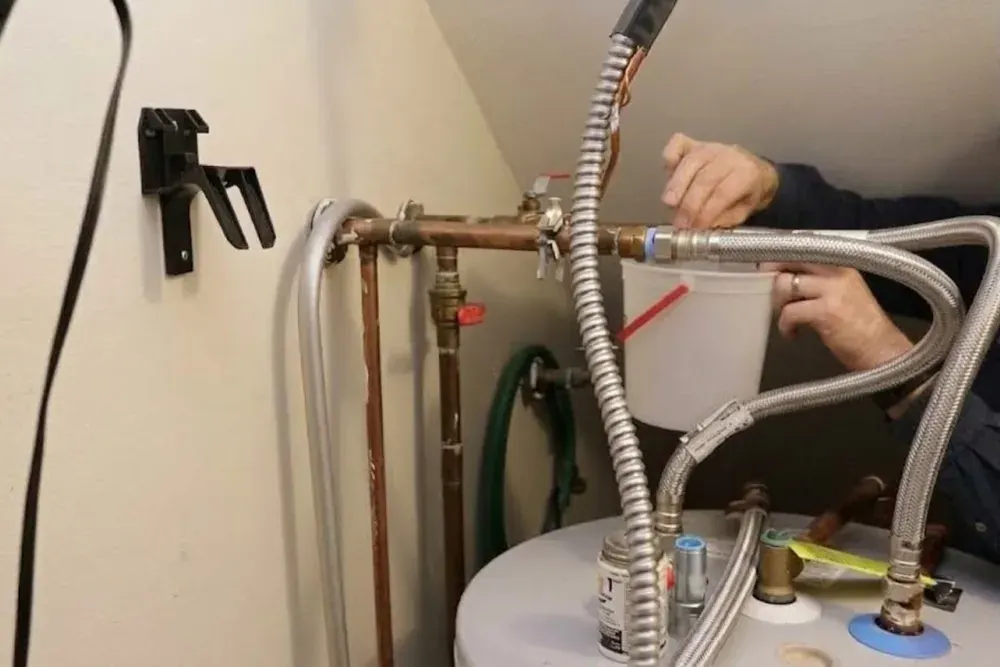
Connect a hose to the drain valve and drain some or all of the water.
- 5
Test after the repair
Refill, bleed air at a hot tap and check for leaks before restoring power or gas.
Reading the data plate before you shop
The data plate on the side of the tank lists the model number, capacity, fuel type, element wattage and relief valve rating. Take a photo of it before you buy anything. Parts are matched to these details, and a wrong wattage or valve rating can cause trouble.
The plate also shows the manufacture date inside the serial number. A tank past ten years deserves a closer look before you spend on parts, since other components are likely to follow.
Signs of trouble that need a call right away
Water pooling at the base, a hissing or popping from the tank, a relief valve that discharges steadily and the smell of gas near a gas unit all call for immediate action. Shut off power or gas and the cold supply, then call.
Do not cap a relief valve or plug its discharge pipe. That valve is the safety release, and blocking it can turn a leak into a pressure hazard. Leave the repair to a plumber.
Standards on relief valves and parts
Relief valves are required on tank water heaters under the California Plumbing Code, based on the Uniform Plumbing Code (UPC). Replacement parts should match the maker's guidelines for rating and fit.
Check the data plate before buying a relief valve. The pressure and temperature rating must match the tank, and a wrong valve can fail to open when it should.
Santee note: permits and strapping
The City of Santee's page on work not requiring a permit does not mention water heaters, so ask Planning and Building about any work beyond a simple part swap. The district's hazard plan names earthquakes on the San Andreas and Elsinore faults as risks to the region, which is a good reason to check that your tank is strapped.
If you find a leak at the tank body, do not wait. Shut off the cold supply and power or gas, and call. A failing tank can release a lot of water quickly.
Sources: City of Santee permit page, Padre Dam Municipal Water District hazard mitigation annex (San Diego County, 2023) and 2023 Water Quality Report.
Water heater part failing?
Call the 24/7 line for repair or replacement.
Water heater parts questions
If you are comfortable with electrical safety and the power is off at the breaker, yes. Otherwise call a plumber.
Bacteria reacting with the anode rod can cause it. Replacing or changing the rod and flushing the tank often helps.
Dry the area and watch. A drip at a fitting is fixable. Water from the tank body is not.
A small part can be worth it. A major repair on an old unit rarely is.
Yes. See our El Cajon page for details.