The short answer
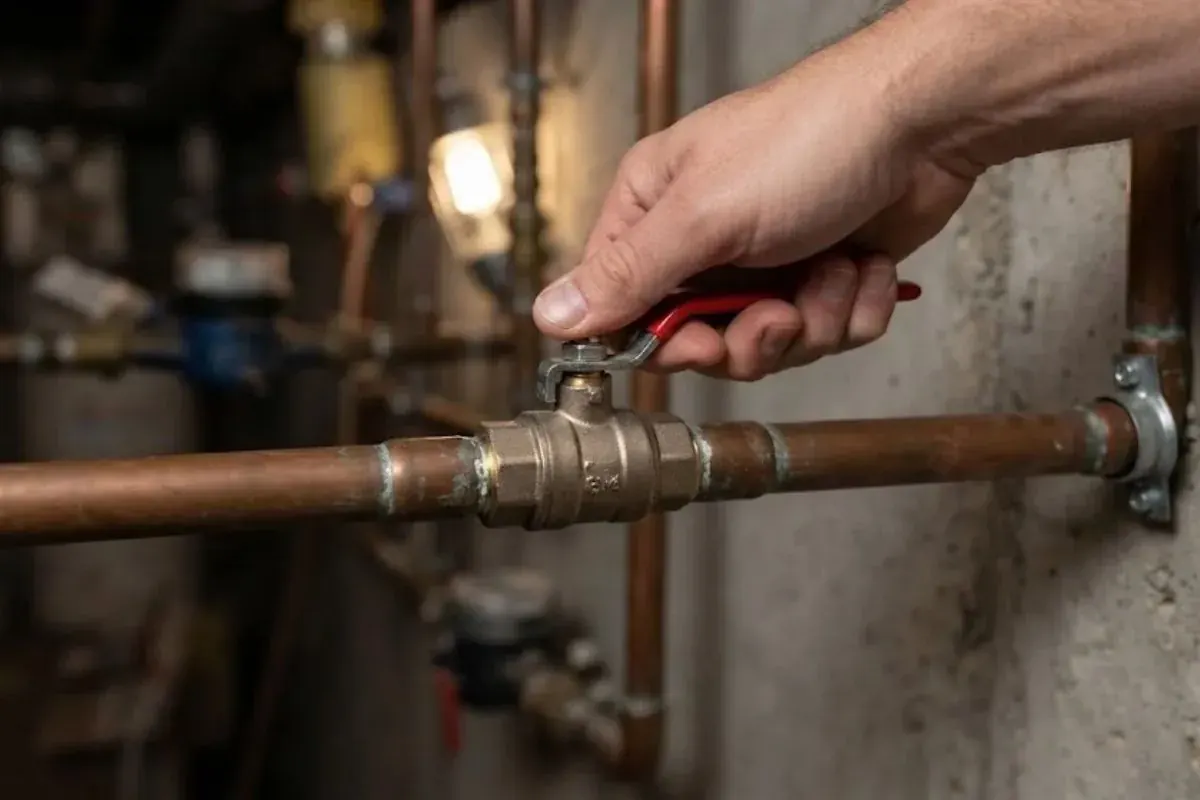
Your main water shutoff is usually where the water line enters the house. Common spots are near the front hose bib, on an exterior wall close to the meter, in the garage near the water heater or in a utility closet. There may also be a second valve at the meter box by the curb, which belongs to the water district.
Find yours today, not during a leak. Turn it all the way off and on once to confirm it moves, then tag it so everyone in the house can find it. A valve that has never been turned may seize, and an emergency is the worst time to learn that.
Where to look and what you will see
Valves come in two common types.
| Location | What to look for | Notes |
|---|---|---|
| Front of the house near a hose bib | A pipe rising out of the ground with a wheel or lever handle | Most common in single-story homes |
| Garage wall near the water heater | A valve on the cold line entering the garage | Check behind storage |
| Utility closet or laundry | A valve on the wall where the line enters | Common in townhomes |
| Meter box at the curb | A shutoff on the district side of the meter | Belongs to the district, so avoid using it except in a real emergency |
Round wheel handles are gate valves. Lever handles are ball valves and are quicker to close.
How to test your main valve
A yearly test takes five minutes.
- 1
Locate it and clear the area
Move boxes and plants away so you can reach it fast.
- 2
Turn it off
Turn a wheel handle clockwise until it stops. Turn a lever a quarter turn so it sits across the pipe.
- 3
Check the taps
Open a faucet in the house. Flow should stop within a few seconds.
- 4
Turn it back on slowly
Open the valve and let the pipes refill. Open a tap to bleed air.
- 5
Tag the valve
Write the date and mark it so nobody has to search in an emergency.
What to do if the valve will not turn
Older gate valves can seize with mineral scale and age. Do not force a stuck handle with a wrench, because the stem can snap and leave you with a flowing leak. Try gentle back-and-forth movement and a drop of penetrating oil on the stem packing.
If it still will not move, call a plumber to replace it. A new ball valve is a simple part, and it gives you a reliable shutoff for years. This is also the time to add shutoffs at the water heater and under sinks, so a small leak does not mean shutting off the whole house.
After you shut it off in an emergency
Closing the main stops the flow. These steps limit the damage.
- Open a low faucetDraining the pipes relieves pressure and reduces leakage.
- Turn off the water heaterSwitch off the power or set gas to pilot so the tank does not run dry.
- Move belongings and take photosRecord damage for insurance before cleanup.
- Call the 24/7 lineDescribe the leak and where the valve is. See burst pipe repair for what the visit involves.
Make a shutoff plan for the household
Every adult in the house should know where the main valve is and how to turn it. Show teenagers and houseguests too. A one-minute walk-through now beats a phone call during a leak.
Keep a flashlight and the right tool nearby, such as a valve key or a wrench for a stubborn handle. Write the plumber's emergency number on a card near the valve, and note which breaker feeds the water heater so you can switch it off quickly.
Valve types and standards
Gate valves, ball valves and angle valves all appear on house mains. The California Plumbing Code, based on the Uniform Plumbing Code (UPC), expects a shutoff on the supply, and valves for drinking water should carry NSF/ANSI 61 certification.
A ball valve moves a quarter turn and is easier to trust in an emergency. A plumber can replace a stuck gate valve in a short visit.
Santee note: earthquakes and your shutoff
Padre Dam Municipal Water District's hazard mitigation annex says all of its water is imported and that earthquakes on faults such as the San Andreas and Elsinore could disrupt delivery and stress pipelines. After a strong quake, a broken line inside your home is possible, and closing the main stops water from flowing into a damaged system.
The City of Santee's page on work not requiring a permit says that replacing a failed concealed water pipe is new work needing a permit. A new shutoff valve is a small job, but ask Planning and Building if the work involves rearranging pipes. A practical step is to learn your valve now and keep a wrench or the right tool near it.
Sources: Padre Dam Municipal Water District hazard mitigation annex (San Diego County, 2023). City of Santee, Work Not Requiring a Building Permit.
Main valve stuck or leaking?
Call the 24/7 line for valve replacement and leaks.
Main shutoff questions
No. The meter valve belongs to the district. Your main valve is on your side, usually at the house. Use yours first.
Once a year is enough, and after any plumbing work.
Yes. Fixture shutoffs let you stop a single leak without losing water to the whole house. See leak detection if you suspect a hidden leak.
A weeping stem usually needs the packing nut tightened or the valve replaced. Do not ignore it.
Yes. See our El Cajon page for coverage and ZIP codes.